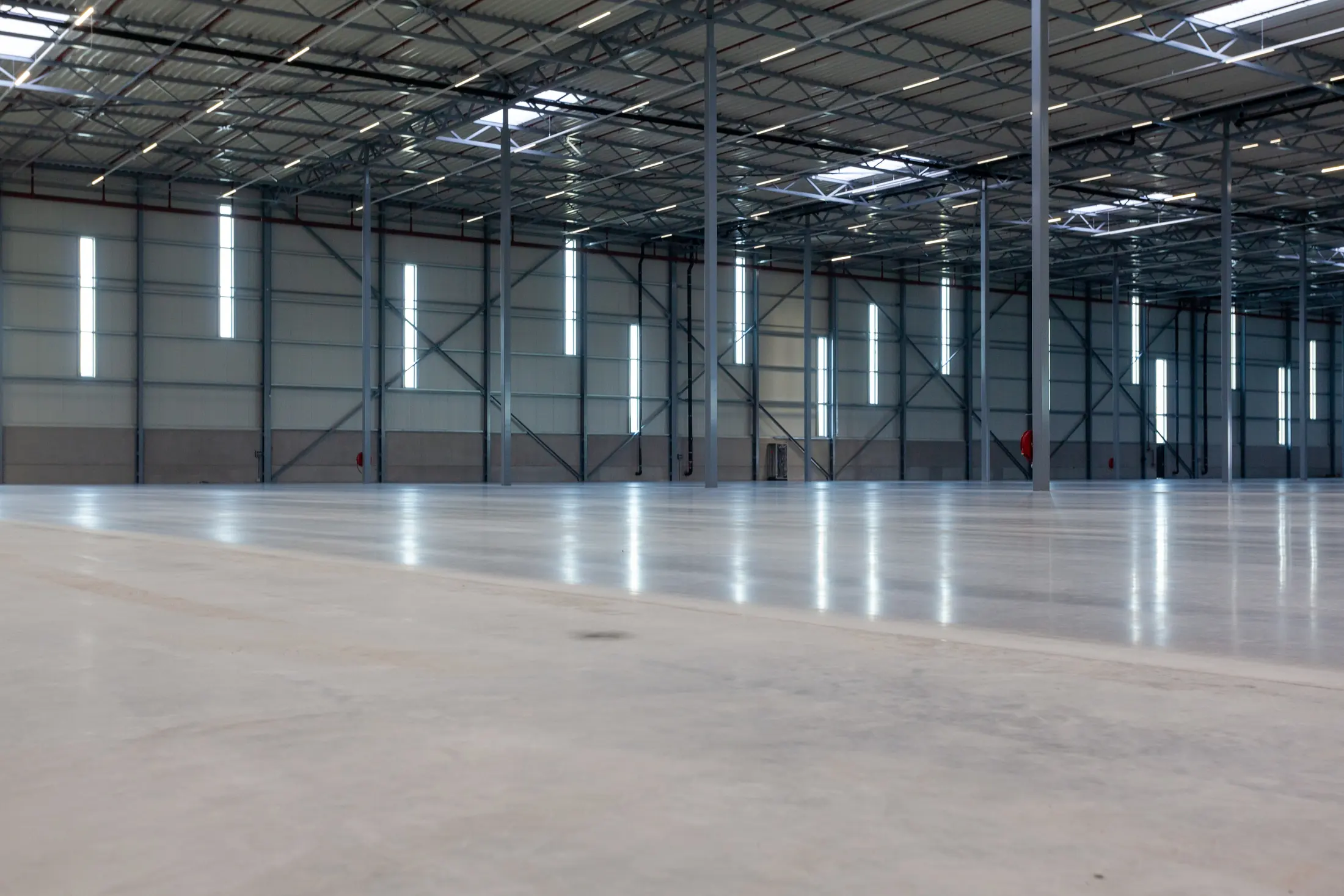
Industrial floors are judged on uptime. A warehouse floor that sheds dust onto stock, has crumbling joints that jar forklifts, or has faded aisle markings is costing money every day, even if nobody budgets for it. A coating program fixes those problems, but only if the system is matched to the traffic, the chemicals and the building.
We coat warehouses, distribution and storage space, fabrication and assembly shops, and maintenance bays in the business parks along the I-10 corridor and into Tempe, Chandler, south Phoenix and west Mesa. This page covers how we size up a facility, what systems we use, and how we keep your operation running while we work.
Facilities we coat
The case for coating an industrial slab
Dust control. Untreated concrete constantly releases fine dust as forklift tires grind the surface. That dust settles on inventory and equipment and gets into air filters. A sealed floor stops it at the source.
Brighter buildings. Light-colored coatings reflect overhead light. Many facilities find aisles noticeably brighter after coating, which helps with picking accuracy and safety.
Wear resistance. High-build coatings take the abrasion that would otherwise slowly erode the concrete surface in drive lanes.
Spill containment. Oils, hydraulic fluid and chemicals stay on the surface for cleanup instead of soaking into the slab.
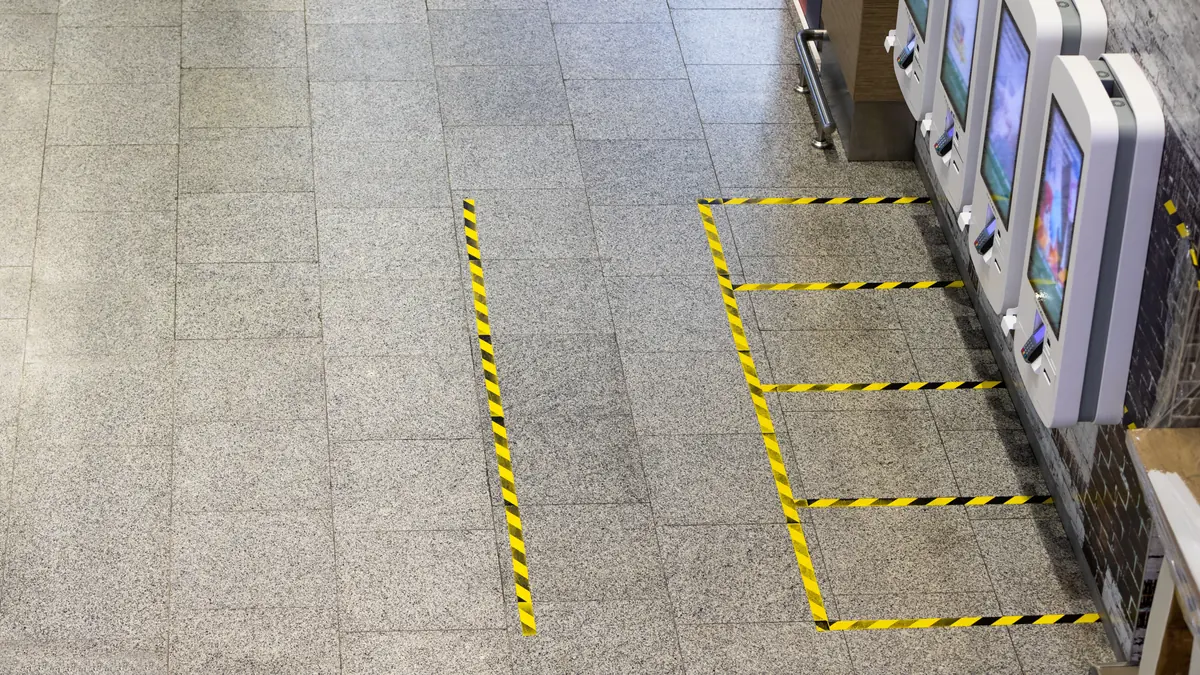
Clear organization. Painted or coated striping, pedestrian walkways and zone colors make traffic flow obvious and support your safety program.
Industrial coating systems
Industrial floors range from simple sealers to thick multi-layer builds. We recommend the lightest system that will genuinely handle your traffic.
Striping, walkways and safety markings
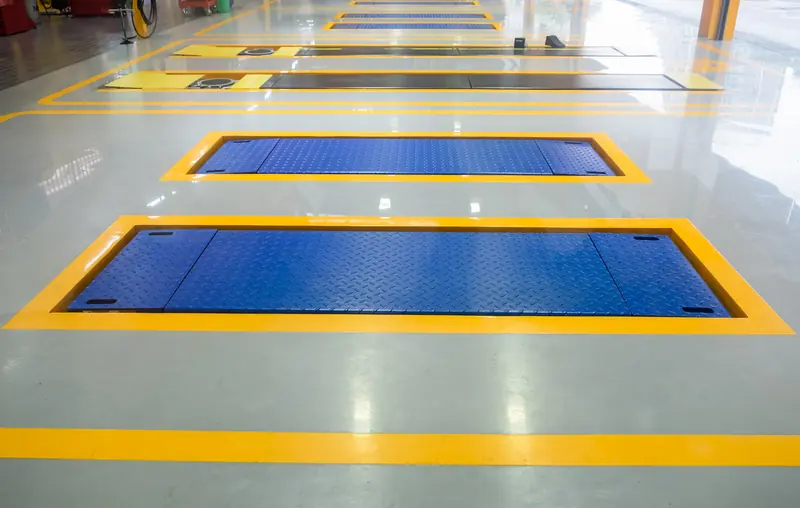
Floor markings are one of the most cost-effective safety tools in a facility. We lay out and coat:
- Forklift and pedestrian lanes
- Racking and staging zones
- Hazard and keep-clear areas around panels, eyewash stations and doors
- Parking and charging areas for equipment
- Color-coded zones for receiving, storage, quality hold and shipping
Coated markings are bonded into the floor system, so they last far longer than paint or tape. We can follow your existing layout or work with your safety lead to design a new one.
Joints: the part of the floor everyone forgets
Control joints and construction joints are where industrial floors break down first. Hard forklift wheels crossing an open joint chip its edges, and over time the joint turns into a rut that jolts every load.
Before coating, we clean out joints, repair spalled edges and fill them with a semi-rigid filler suited to forklift traffic. The coating then runs over a smooth, supported transition. It is one of the most noticeable improvements for drivers, and it protects the coating along those lines.
How we coat a working facility
Facility walk
We assess the slab, joints, moisture, chemicals, traffic patterns and current markings, and talk through your operating schedule.
Phased plan
The floor is split into sections that can be emptied, coated and returned in sequence, often around racking.
Prep
Large ride-on and walk-behind grinders with dust collection, then joint and crack repair.
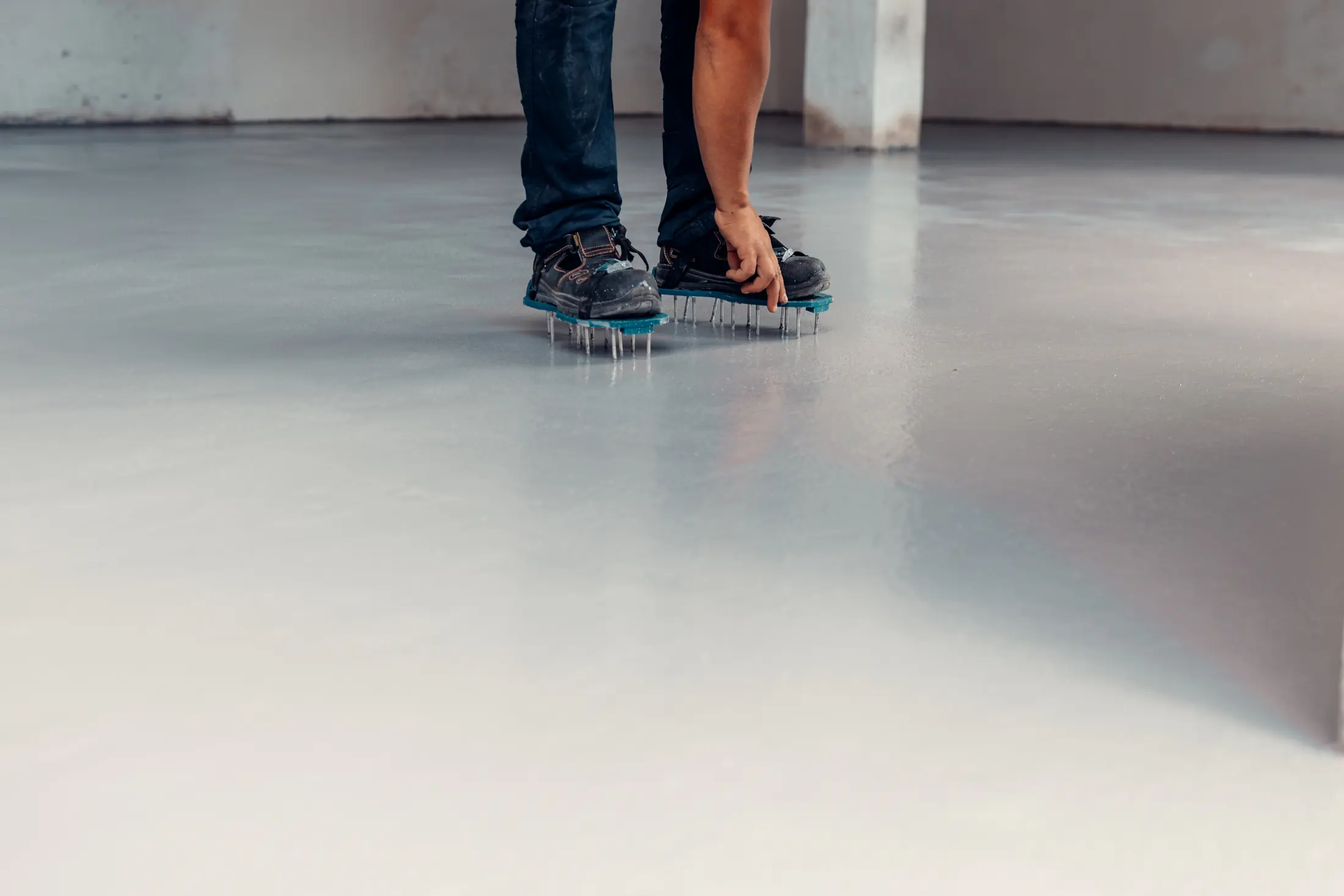
Coating
System layers applied section by section, with cure times set to your return-to-service needs.
Striping and handover
Lines and zones laid out and coated, followed by a walkthrough and maintenance guidance.
Summer heat in Valley warehouses
Many industrial buildings around Phoenix rely on evaporative cooling or are only partly cooled, and interior temperatures in summer can be very high. That affects coatings in two ways. Hot slabs shorten working times, and cooled-then-heated cycles stress rigid coatings at joints and cracks.
We plan around both. Summer industrial work is scheduled for nights or early mornings when possible, materials are chosen for the conditions, and flexible joint treatments are used where temperature swings are large. Large dock doors also bring in dust and the occasional monsoon downpour, so we pay attention to texture and the transition zones near docks.
What drives the cost of an industrial coating
Industrial coating prices vary widely, and square footage is only part of it. The biggest drivers we see are:
- Slab condition. Oil-saturated areas, worn drive lanes, old coatings and failing joints all add prep time.
- System thickness. A sealer, a thin-film epoxy and a high-build system differ greatly in material and labor.
- Access and phasing. Working around racking, live operations and narrow time windows takes more crew hours than an empty building.
- Joint and crack work. Long runs of spalled joints are a meaningful part of many industrial budgets.
- Striping and zoning. Simple lane lines cost far less than a full color-coded layout.
We break each of these out in the proposal, so you can see where the money goes and decide where to invest. Sometimes the right answer is a heavier system in the drive lanes and a lighter one under racking.
Keeping a coated warehouse floor in service
A coated industrial floor is low-maintenance, not no-maintenance. Auto-scrubbers with neutral cleaners and soft pads keep it clean without dulling the finish. Grit is the main enemy, so walk-off areas at dock doors and regular sweeping in summer, when dust blows in, extend the life of the topcoat considerably.
Plan on a quick yearly look at the floor. Drive lanes and turning areas wear first, and catching thin spots early means a simple recoat of those zones rather than a larger repair. We are happy to set up a periodic check as part of your facility maintenance.
Why industrial floors call for an experienced installer
Industrial slabs are large, varied and often contaminated in ways that are not obvious until grinding starts. The work demands heavy grinding equipment with proper dust collection, an understanding of which systems tolerate which chemicals and loads, and the planning skills to work in sections without leaving weak seams. It also demands respect for your operation: clean handoffs between phases and areas returned when promised. A coating that fails in a working warehouse costs far more than the floor itself.
Choosing colors for an industrial floor
Color on an industrial floor is a working decision. Light greys and tans reflect the most light and show spills clearly so they get cleaned up, which matters for safety. Mid greys hide tire marks and general grime between scrubbings. Darker colors are rarely the best choice in a warehouse; they absorb light and show dust from the dock doors.
Many facilities use a light field color with contrasting safety yellow for lanes, and reserve other colors for specific zones such as red for hazards or blue for staging. We help you choose a scheme that works with your lighting and your safety program.