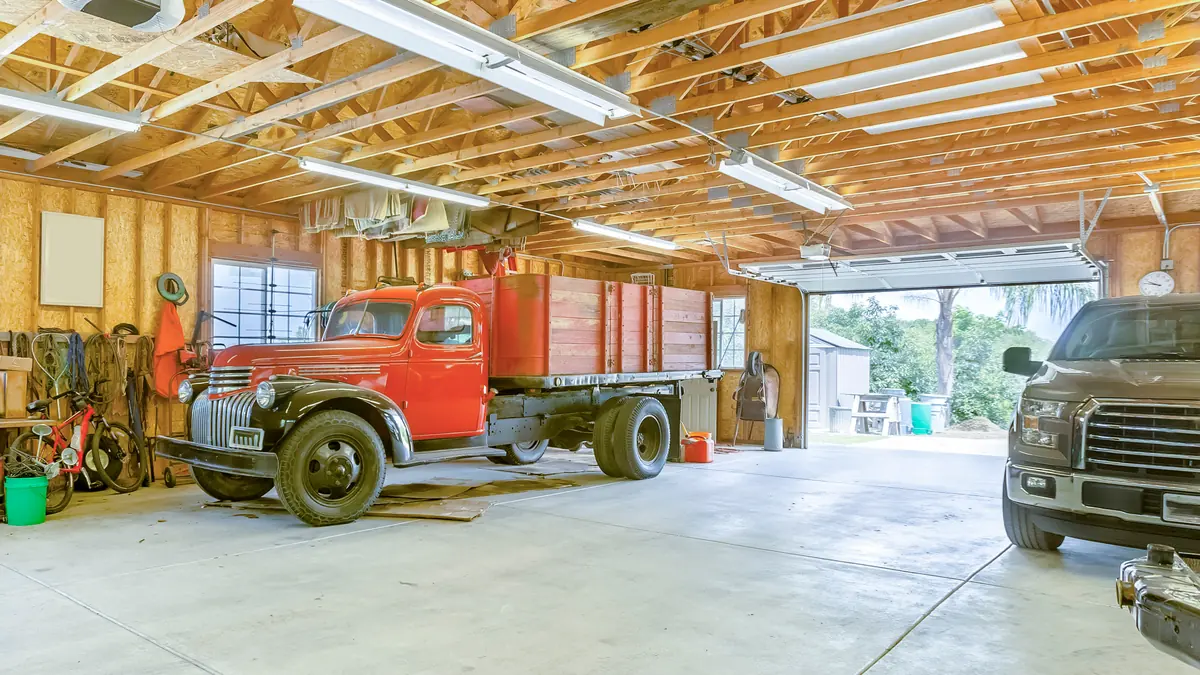
Ask ten neighbors on your street about their garage floors and you will probably hear the same few stories. The kit from the hardware store that started peeling where the car parks. The "epoxy" from a quick-turn company that turned yellow by the door. The bare slab that sheds grey dust onto everything stored in the garage.
None of that is inevitable. A properly built garage coating is one of the most durable surfaces you can put in a home, and in a climate like ours it is also one of the most useful. It seals the concrete, stops the dust, wipes clean, and makes a space you use every day look finished. This page walks through how we build those floors, what your options are, and why the details matter more in Ahwatukee than they might somewhere milder.
Why garage floors fail here, and how ours are built differently
Almost every failed garage floor we remove has the same root cause: the coating was stuck to the surface of the concrete instead of bonded into it. Acid etching, pressure washing or a quick sanding leave behind a weak, chalky top layer. The coating grips that layer, and when a hot tire pulls on it, the weak layer lets go and takes the coating with it.
We start with a full diamond grind. That removes sealers, paint, curing compounds and the soft "cream" on top of the slab, and leaves a profile a bit like medium sandpaper. The base coat soaks into that profile and cures as part of the concrete. That bond is what holds through a decade of summers.
The second cause is chemistry. Standard epoxies are excellent base coats but they do not love sunlight. Exposed to UV, they amber and chalk. We finish garages with polyaspartic or another UV-stable topcoat so the first few feet inside the door look the same as the back wall.
Garage coating systems and finishes
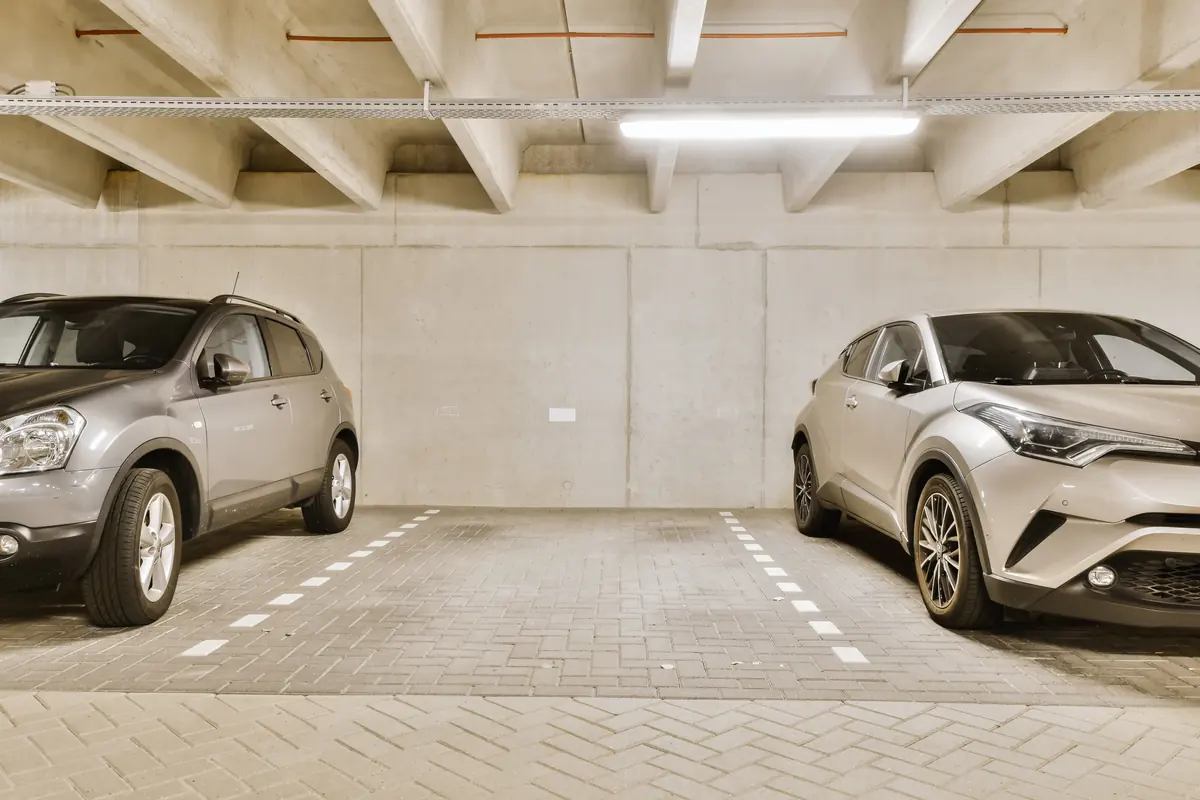
Most Ahwatukee garages end up with one of four builds. Each uses ground concrete and repaired cracks as its starting point; what changes is the look, the thickness and the cure time.
Flake color is where most people spend their decision time. Lighter blends with cream, tan and grey make a garage feel bigger and stay cooler looking; darker blends hide tire marks better. Mid-tone desert blends are a safe bet next to stucco and travertine. Bring your phone to the estimate and we can hold chip samples against your walls and cabinets.
What a coated garage gives you
The obvious benefit is looks, and that matters. A finished floor makes a garage feel like part of the house. But the day-to-day gains are what owners mention months later.
No more concrete dust. Bare slabs constantly shed fine particles that get tracked inside and settle on everything stored on shelves. A sealed floor stops that completely.
Spills stay on top. Oil, coolant, brake fluid, pool acid, fertilizer and the rusty water that drips off cars after a monsoon storm all wipe up instead of soaking in and staining.
Easier cleaning. A dust mop and the occasional damp mop is all a coated floor needs. Leaf blowers work well too, which matters after a dusty week.
More light. Coated floors reflect light. Many owners say the garage feels noticeably brighter without changing a single fixture.
Better resale presentation. A coated garage photographs well and stands out in a walkthrough, especially in neighborhoods where buyers compare several similar homes.
Built for an Ahwatukee garage
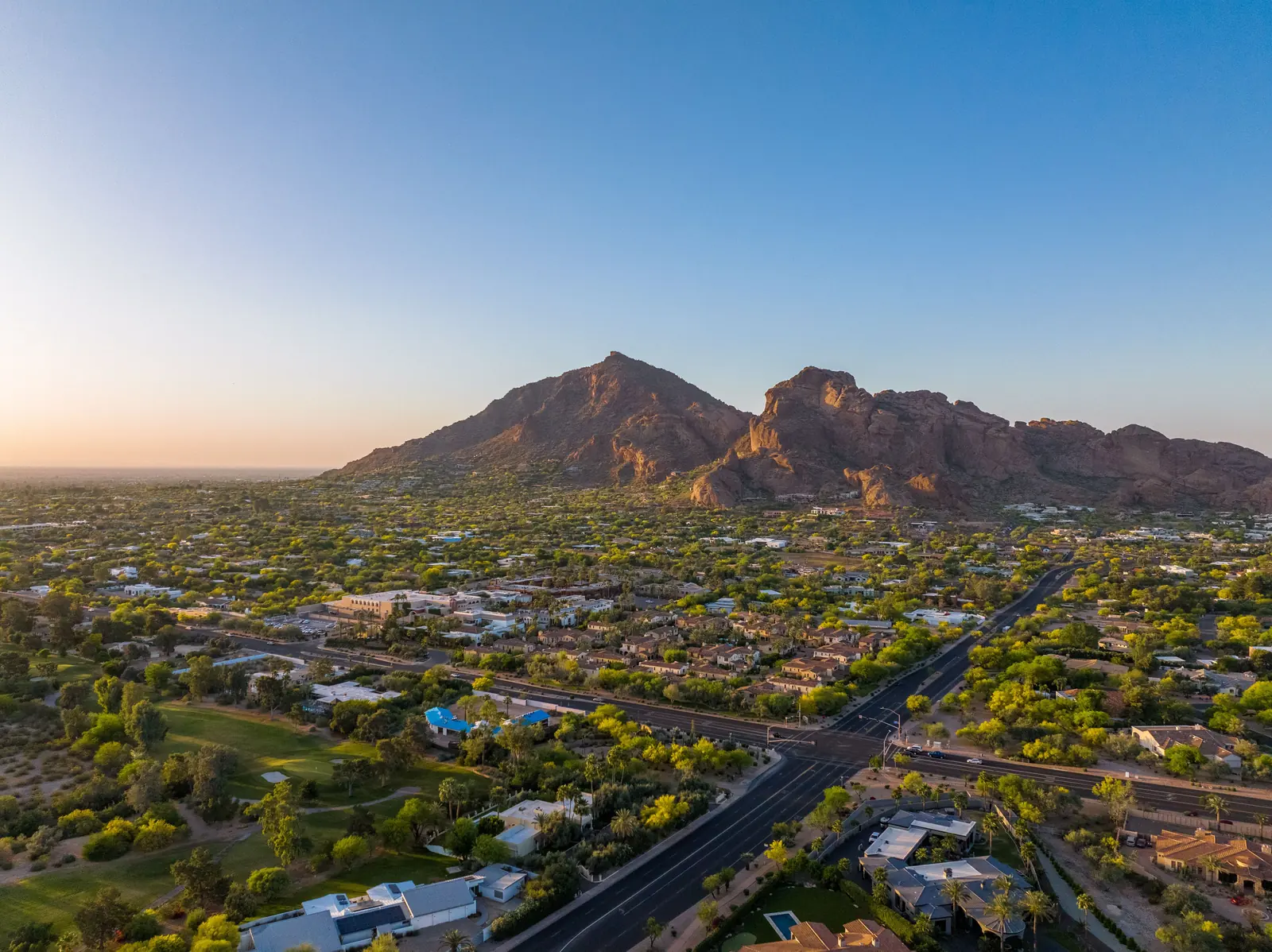
A few local realities shape how we plan every garage job.
Slab temperature. In summer, the slab in a closed garage can be very warm by mid-morning. Resin cures faster in heat, which shortens working time and can cause problems if a crew is rushing. We start early, keep material cool, mix in smaller batches and adjust the system to the slab temperature on the day.
West-facing doors. Plenty of homes in the Foothills have garages that catch the late sun. That is exactly where cheaper coatings yellow first. UV-stable topcoats are not optional on those floors.
Monsoon grit and water. Wind-driven dust and runoff get under door seals every summer. A textured topcoat keeps the floor safe when it is wet, and a flake finish hides the fine film of dust that settles between cleanings.
Older, treated slabs. Homes from the 1980s and 1990s near the Lakes often have years of paint, sealer or patching on the garage floor. All of it has to come off. We price that removal honestly instead of hoping it will hold.
How a garage installation runs
Most two- and three-car garages take one or two days on site. Here is what happens, in order.
Clear and protect
You empty the floor (we can tell you what can stay along the walls). We tape and cover the lower walls, door tracks and any cabinets.
Grind and vacuum
Diamond grinders with attached vacuums open the concrete and remove old coatings with very little airborne dust.
Repair
Cracks are chased and filled, spalls and pits patched, and the stem wall and edges hand-ground so nothing is missed.
Base coat and broadcast
The base coat goes down and, for flake systems, chips are broadcast into the wet resin to refusal or to your chosen coverage.
Scrape, sweep, topcoat
Once cured, loose flakes are scraped and vacuumed, then the clear topcoat is rolled on, with slip-resistant additive if you want it.
Walkthrough
We walk the floor with you, go over cure times and leave written care instructions.
Why the install crew matters more than the brand
Coating manufacturers make good products, and most of the well-known systems will perform if they are installed correctly. The variables that decide whether yours lasts are all on the job site: how well the slab is ground, whether moisture was checked, how cracks were treated, whether the resin was mixed to ratio and applied within its window in the heat, and whether the topcoat was thick enough.
A DIY kit can look fine on day one. The difference shows after the first summer, when the professional floor still looks new and the kit is lifting under the tires. If you have already tried a kit and it failed, that is fine; we grind it off and start over.
Caring for your new garage floor
Keep it simple. Dust mop or blow out the garage weekly in dusty months. Wipe up oil and chemicals when you notice them. For a deeper clean, use warm water and a pH-neutral cleaner; skip citrus degreasers and harsh solvents, which can dull a topcoat over time.
Put a small mat or a plywood pad under kickstands and jack stands, and use felt pads or casters on heavy cabinets you move often. Most garage floors never need more than that. If the topcoat dulls in a heavy-traffic lane after many years, it can be lightly abraded and recoated without redoing the whole system.