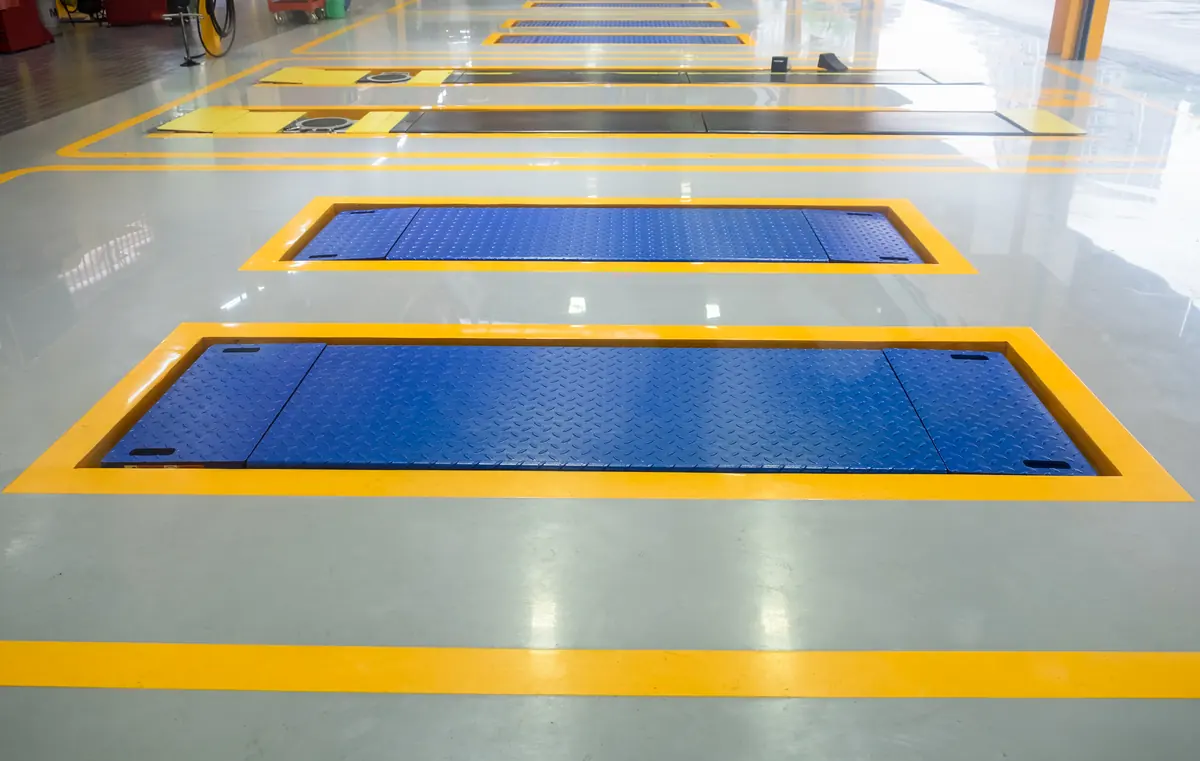
Polyurea is the quiet workhorse of modern floor systems. You will not see it as the glossy top layer people photograph, but in many of our best floors it is doing the most important job: holding on to the concrete.
Where a traditional epoxy cures hard and rigid, polyurea cures tough but flexible. That difference sounds technical, but it matters in a place where a garage slab can see a large temperature swing between a summer afternoon and the early morning. A flexible base coat tolerates that movement and hairline cracking better, and it handles impacts and abrasion without chipping. This page explains where polyurea fits, and when it is worth choosing over other base coats.
Why flexibility matters for Arizona concrete
Concrete expands as it warms and shrinks as it cools. In a closed Ahwatukee garage, the slab warms through the day, then gives that heat back overnight. Over a year, that adds up to a lot of tiny movement, concentrated at cracks and joints.
A rigid coating has to resist all of it. Over time, stress builds at the edges of cracks and at the bond line, which is where chipping and delamination start. A flexible coating stretches and recovers instead.
Polyurea also bonds strongly to properly ground concrete and cures fast, so it is useful both for its toughness and for keeping schedules short. It is not magic; a moving structural crack will still telegraph through any coating. But for normal slab movement and hairline shrinkage cracks, flexibility gives the system real margin.
What polyurea brings to a floor
Elongation and recovery. Polyurea can stretch noticeably more than rigid epoxies without tearing, then return to shape. That is the key property behind its durability on moving slabs.
Impact resistance. Dropped tools, trailer jacks and equipment are less likely to chip a polyurea base, because the coating absorbs some of the shock rather than fracturing.
Abrasion resistance. It wears well under foot and wheel traffic, which is why it is common in commercial and light industrial floors.
Fast cure, wide temperature range. Polyurea cures quickly and is less fussy about cool mornings than slow epoxies, which helps keep jobs moving through the year.
Chemical resistance. Paired with the right topcoat, the system handles oils, fuels and most cleaners found in garages and shops.
How polyurea fits into a floor system
We rarely install polyurea on its own. Instead, it is chosen as a layer in a system built for the space.
Spaces where polyurea makes sense
Our polyurea installation process
Assess cracks and movement
We map cracks and joints and judge which are cosmetic and which are moving.
Grind to profile
Diamond grinding creates the open texture polyurea needs to bond.
Flexible repairs
Cracks are routed and filled with flexible material; joints are treated according to the plan.
Polyurea base coat
Applied in workable sections, often with a flake broadcast or pigment.
Topcoat
A UV-stable polyaspartic or other topcoat suited to the use.
Polyurea in Ahwatukee: heat, cracks and older slabs
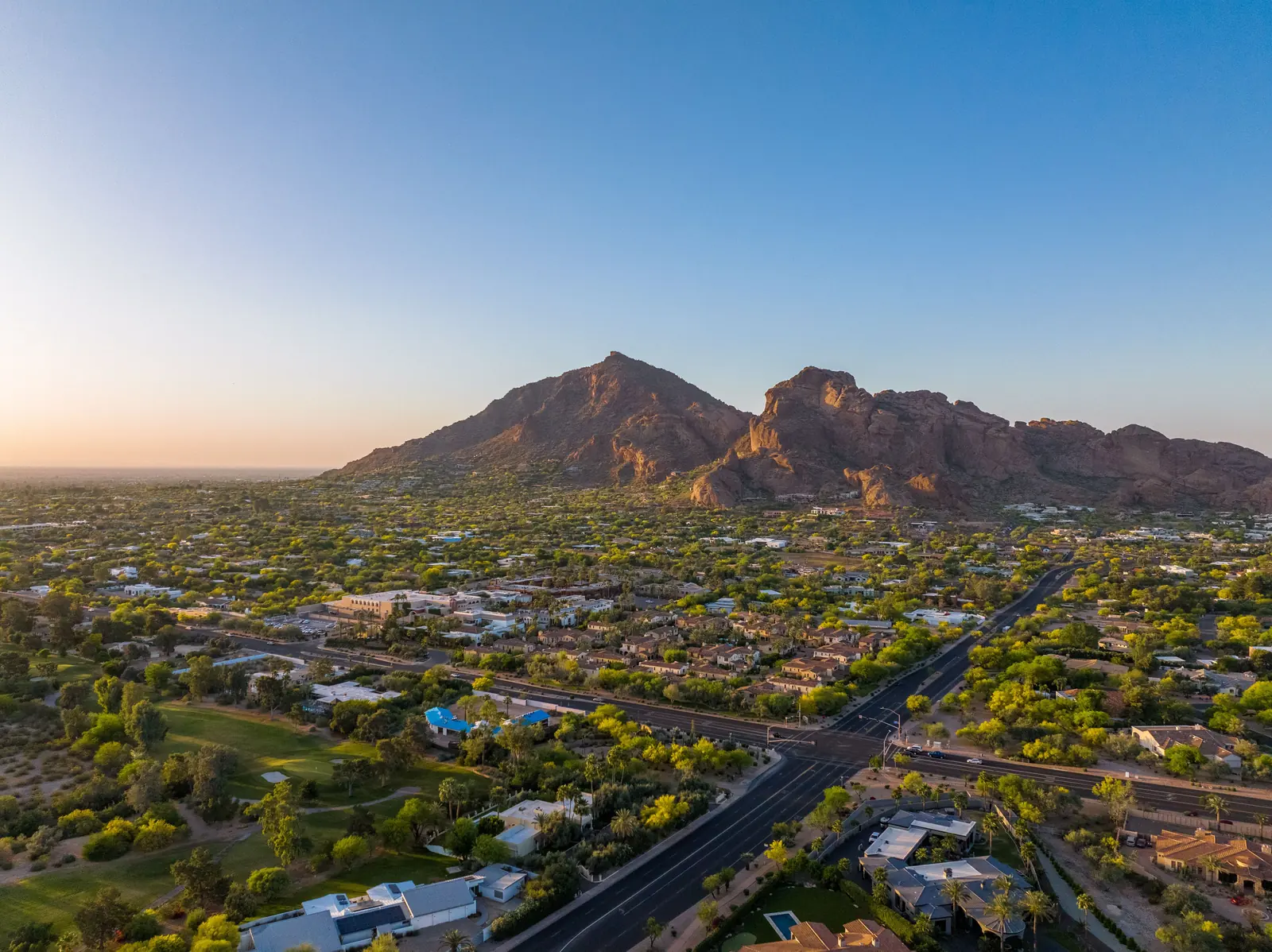
Two things make polyurea especially relevant here. The first is the temperature swing that garage slabs go through for much of the year. The second is age. Many homes around the Lakes and older parts of the village have slabs that have developed shrinkage cracks over decades, and some have settled slightly over the area's expansive soils.
For those floors, a flexible base gives the coating more tolerance. It will not stop a crack that is actively growing, and we will tell you if we see signs of structural movement that should be looked at first. But for the normal cracking that comes with an older Arizona slab, polyurea is often the better foundation.
Why polyurea needs an experienced crew
Polyurea cures fast. That is one of its benefits and the main reason it is not a homeowner product. Mixed material has a short working life, especially on a warm slab, and the bond depends on applying it to a clean, freshly ground surface in the right thickness.
There is also judgment involved: knowing which cracks to fill rigidly, which to fill flexibly, which joints to honor and when a crack is a sign of something bigger. That comes from looking at a lot of slabs.
Signs your floor would benefit from a flexible base
Not every floor needs polyurea. These are the conditions where we tend to recommend it.
Cost and long-term value
A polyurea system usually costs somewhat more in materials than a comparable epoxy system. On a typical garage or shop floor, though, preparation and labor make up most of the price, so the total difference is often smaller than people expect.
The value comes over time. A base coat that tolerates movement and impact is less likely to chip at cracks and joints, which are the places floors usually start to fail. For a floor with a lot of cracking or heavy use, that extra margin is often worth it. For a sound, newer slab in a mild use, a quality epoxy base may be all you need, and we will say so.