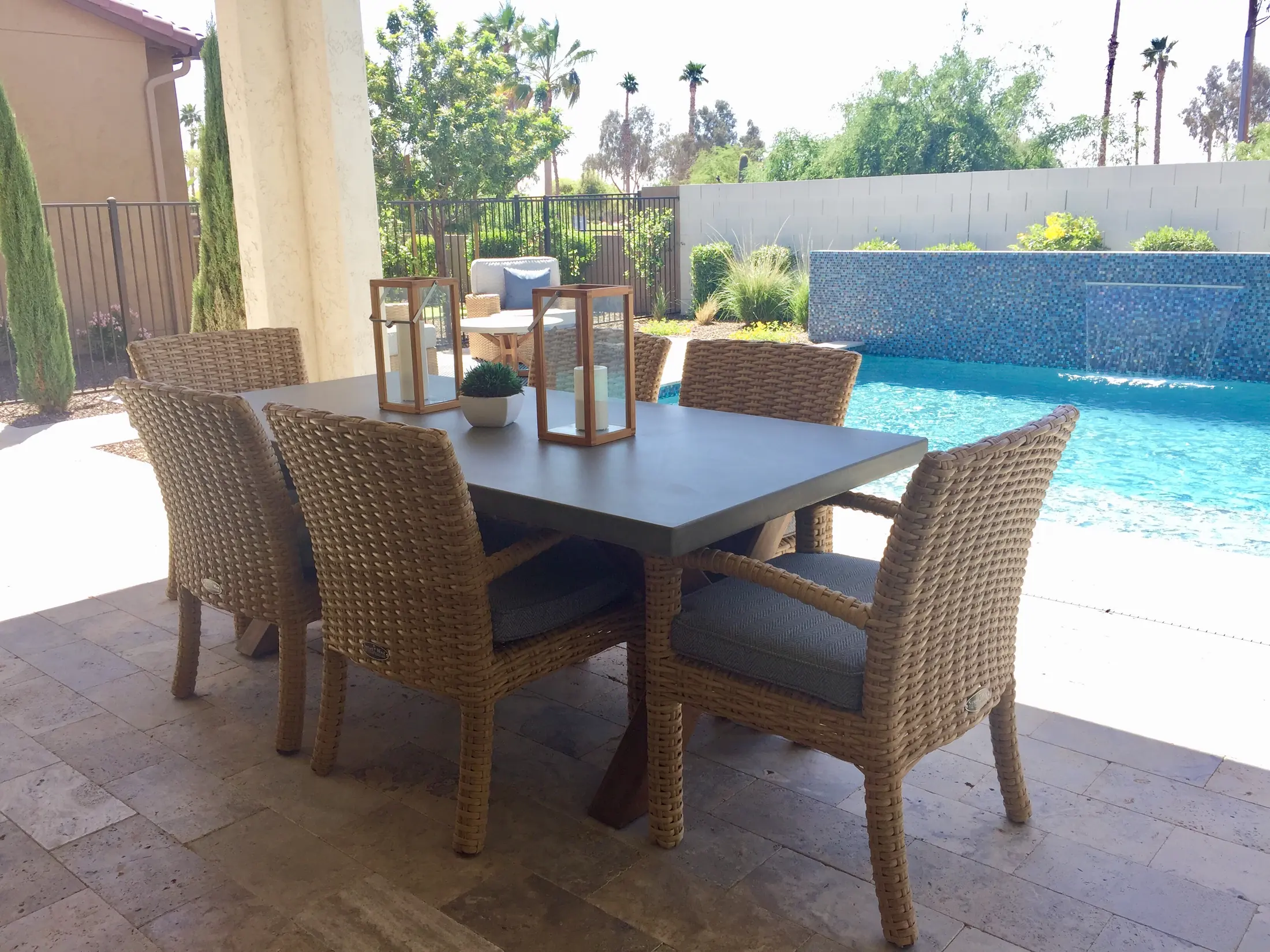
Backyards are a big part of life here. For much of the year, the patio is effectively another room, and the pool deck gets more foot traffic than some hallways. Yet outdoor concrete is usually the most neglected surface on the property. It stains, cracks, grows a white crust from minerals, and in summer can get too hot to cross barefoot.
An exterior coating can fix a lot of that, but only if it is built for outdoors. Garage systems are designed for a sheltered space. Put one in full afternoon sun and it can chalk, yellow or get dangerously slick when wet. Exterior systems use different chemistry, lighter colors and real texture. Here is how we approach them.
Outdoor surfaces we coat
Keeping the surface comfortable in summer
The number one complaint about outdoor concrete here is heat. Any surface in direct July sun will get hot, but color and texture make a real difference to how hot it feels.
Dark colors absorb more sunlight and get noticeably hotter than light ones. That is why we steer most patio and pool deck clients toward light, warm neutrals such as sand, cream, soft tan and pale grey. They look right with desert landscaping and are more comfortable underfoot.
Texture matters too. A lightly textured, knockdown-style or broadcast finish spreads contact and gives grip, while a smooth gloss coat is both hotter-feeling and slicker when wet. For pool areas, we never recommend a smooth glossy exterior finish.
Exterior coating options
Which system fits depends on sun exposure, how the area is used and the condition of the concrete.
What a coated patio does for you
Stain resistance. Barbecue grease, rust from patio furniture, wine, pool chemicals and the orange stains from some irrigation water all clean up far more easily from a sealed surface.
Safer footing. Textured finishes give real grip around the pool and on walkways that get wet from sprinklers and storms.
Fewer cracks catching your eye. Repairs and a uniform finish hide the patchwork of old cracks and mismatched concrete pours that many patios develop.
Less maintenance. No more power-washing grey concrete every spring and watching it stain again within weeks.
Better looking outdoor space. The patio finally matches the effort you put into furniture, landscaping and lighting.
How we coat outdoor concrete
Inspect and test
We check for moisture, old sealers, efflorescence and how water drains off the slab.
Clean and grind
Grease, sealers and mineral deposits are removed, and the surface is ground or profiled.
Repair cracks and joints
Cracks are filled with exterior-rated flexible repair material; control joints are planned.
Apply the system
Base, texture or flake layers and UV-stable topcoats, applied in the cooler part of the day.
Cure and return
Foot traffic usually within a day, patio furniture shortly after. We give exact timing in writing.
HOA approvals and exterior colors
Many Ahwatukee communities have architectural guidelines that cover anything visible from the street, such as front walks, entries and driveways. Backyard patios are often less restricted, but not always.
Before you commit to a color for an exterior surface, check your CC&Rs or ask your HOA. We are happy to provide product names, technical data and physical samples for your submission. It is much easier than redoing a front walk after the fact.
Outdoor conditions in the Foothills
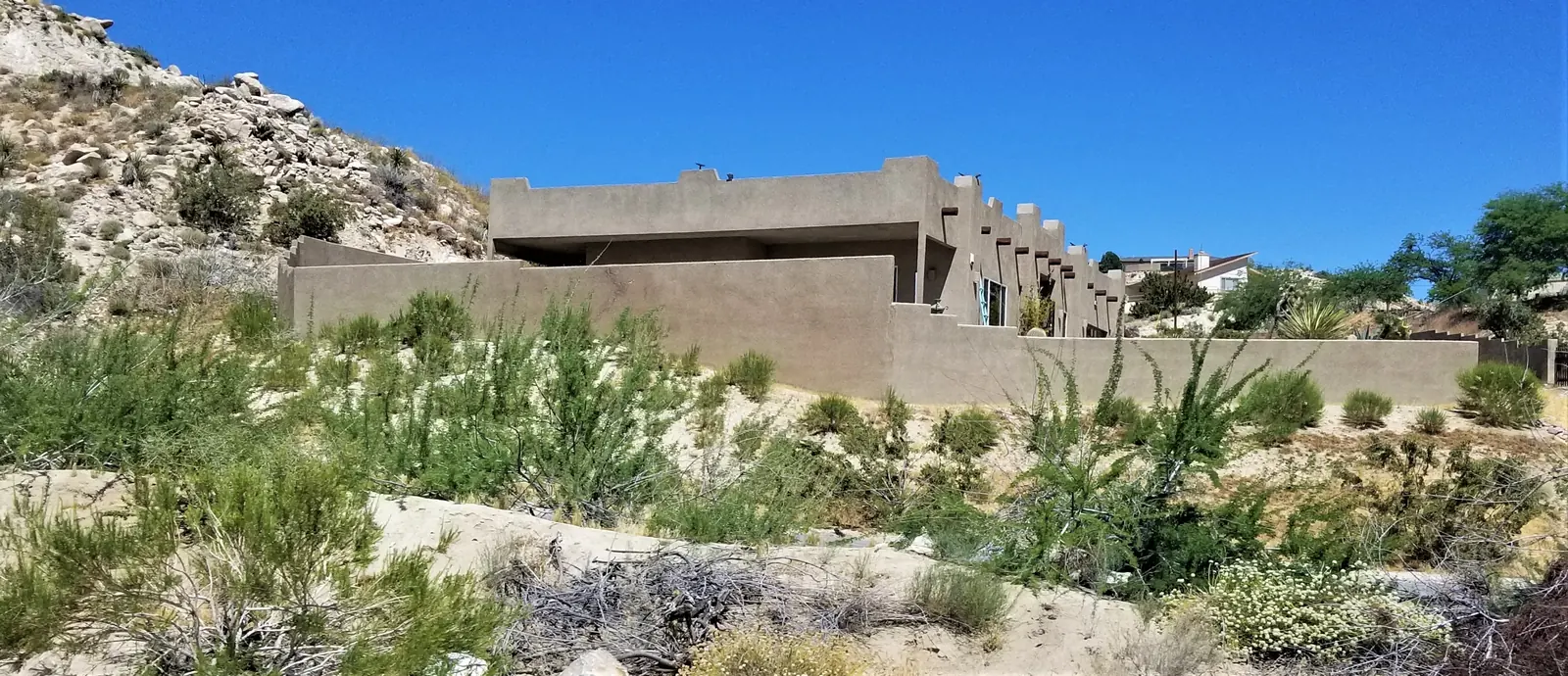
Exterior slabs here face intense UV, very high surface temperatures, sudden monsoon downpours and, in some yards, hard irrigation water that leaves mineral stains. Many also sit on soils that shift slightly with moisture, which shows up as cracking.
That combination is why we are careful about products. We use UV-stable topcoats, favor light colors, add texture for wet conditions and use flexible crack repairs. We also look at drainage: water that pools on a coated patio after a storm is a sign the slab needs attention before or during coating.
Timing matters too. We schedule exterior work for early mornings in summer and keep an eye on monsoon forecasts, since coatings need to stay dry while they set.
Why outdoor coatings are a job for professionals
Exterior coatings fail for predictable reasons: coating over sealers or efflorescence, skipping proper grinding, choosing a product that is not UV-stable, applying in the heat of the day, or getting caught by a monsoon storm before the coating sets. Each of those is avoidable with experience and planning.
There is also the question of texture and safety. Getting a consistent, comfortable, slip-resistant texture across a whole patio or pool deck takes practice. Too little and the surface is slick when wet; too much and it is rough on bare feet and hard to clean.
Caring for a coated patio or pool deck
After a haboob rolls through, hose or leaf-blow the deck before the dust gets ground in. Clean with a mild detergent and a soft brush; avoid harsh acids and high-pressure washing at close range, which can wear the finish over time. Wipe up grease and food spills from grilling areas promptly.
Keep an eye on sprinklers. Overspray from hard water leaves mineral spots, so adjusting heads to keep water off the deck helps the finish look clean. In full-sun areas, a maintenance topcoat after several years refreshes color and texture without starting over.
Pool decks need their own plan
Pool decks combine every outdoor challenge with constant water and bare feet. Chlorine and salt systems splash onto the surface every day, coping stones and expansion joints move at a different rate from the deck, and the area around the pool is where people are most likely to slip.
We treat the joint between deck and coping as its own detail, using flexible sealant rather than coating over it so the deck can move without cracking at the edge. We keep textures consistent right up to the waterline, and we choose colors that stay comfortable on summer afternoons. If your deck drains toward the pool or holds puddles, we will flag it, because standing water shortens the life of any finish.